

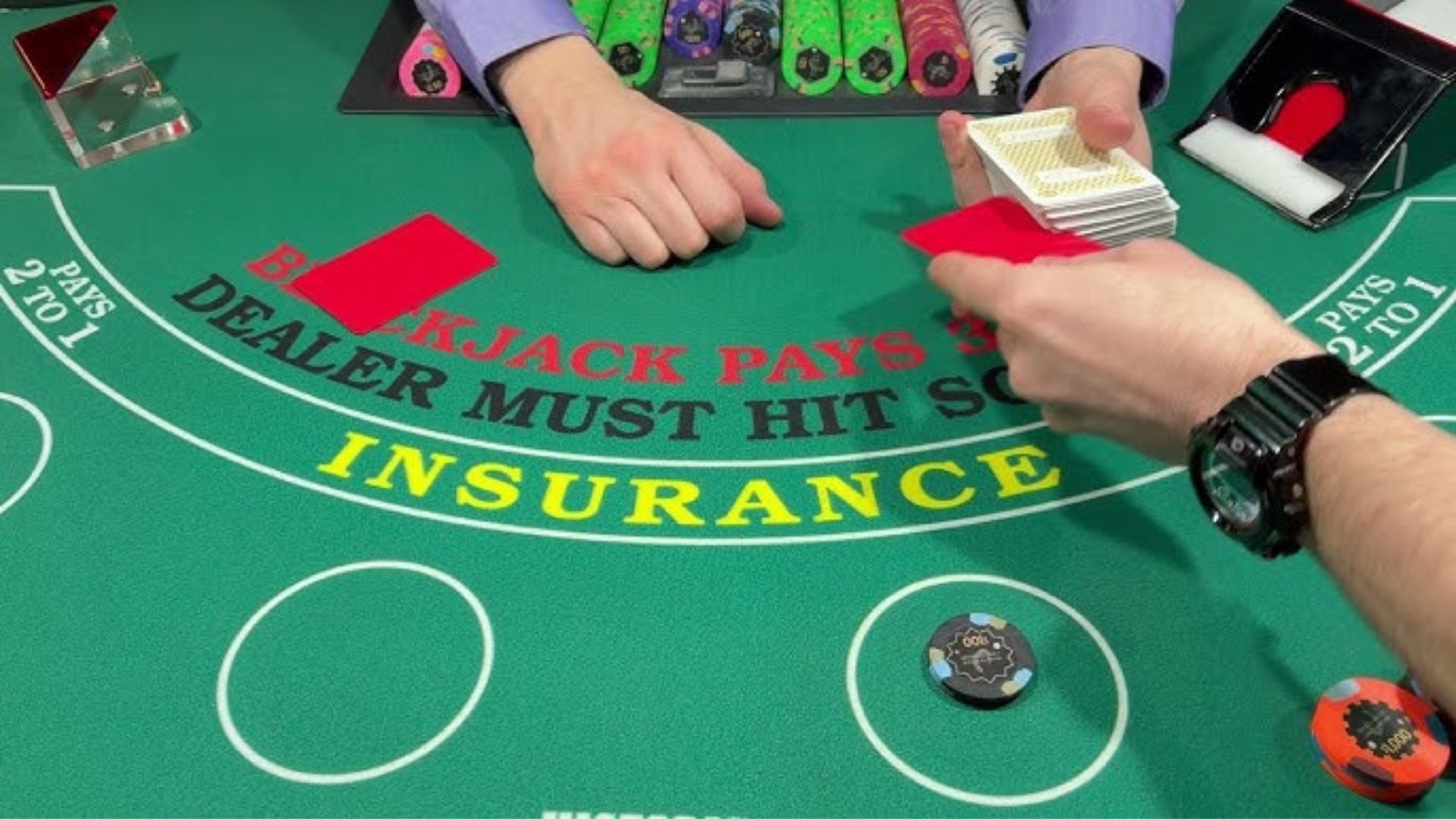
The review takes a deep analytical look at one of the most misunderstood blackjack mechanics: insurance betting. In this King Johnnie Casino Review, we break down how insurance works, why it appears attractive to new players, and why probability shows it is a long-term losing strategy despite its short-term appeal.
At first glance, insurance seems like a smart defensive move. If the dealer shows an Ace, players can protect themselves against a potential blackjack. However, as this casino review explains, the math behind insurance tells a very different story—one that consistently favors the casino over time.
Before we dive deeper into probability and strategy, here are the relevant platform entry points:
These links provide context for real blackjack environments where insurance decisions occur.
Overview of King Johnnie Casino
The platform operates as a modern online casino featuring live blackjack tables with standard international rules. The focus here is not on promotions or interface design, but on gameplay structure where probability decisions matter most.
Key platform features include:
- Live dealer blackjack tables
- Standard 52-card shoe games
- Real-time betting options
- Fast-paced decision rounds
These features make probability-based decisions like insurance highly relevant. However, as the math shows, not all betting options are equally favorable.
How Blackjack Insurance Works
Before analyzing the numbers, it is important to understand the basic concept.
When the dealer shows an Ace, players can place an insurance bet:
- A side bet equal to half the original wager
- Pays 2:1 if the dealer has blackjack
- Loses if the dealer does not have blackjack
Insurance is designed to reduce emotional risk by offering a perceived safety net. However, perception and probability do not always align.
Probability Breakdown of Insurance Bets
When the dealer shows an Ace, only a limited number of remaining cards complete a blackjack. In simplified terms, the probability of the dealer having blackjack is significantly lower than many players assume in practice, especially depending on deck composition.
This imbalance is the core issue:
- Insurance pays only when the dealer has a ten-value card hidden underneath
- In most cases, the dealer does not complete blackjack
Over time, this creates a structural disadvantage for players who consistently take insurance.
Expected Value Analysis
Expected value (EV) measures the average gain or loss per bet over time.
With insurance:
- Wins occur occasionally at a 2:1 payout
- Losses occur more frequently than wins
As a result, the long-term EV becomes negative.
In simple terms:
Insurance looks protective, but statistically, it reduces long-term bankroll efficiency.
Why Insurance Increases House Edge
Insurance is not part of the main blackjack hand—it is a separate side bet with its own math.
Each casino side bet includes a built-in advantage for the house. Insurance amplifies this because:
- It introduces an additional negative-EV wager
- It increases total exposure to unfavorable odds
Over time, repeated use strengthens the casino’s overall edge.
Long-Term Bankroll Impact
Short-term, insurance may feel useful because it softens emotional losses when the dealer shows an Ace. However, long-term effects tell a different story:
- Small losses accumulate gradually
- Bankroll declines faster over extended play
- Expected returns decrease over time
Instead of protecting funds, insurance slowly reduces overall efficiency.
Risk Strategy in Real-Money Blackjack
A strong strategy focuses on long-term mathematical advantage rather than emotional comfort.
A disciplined approach includes:
- Avoiding insurance entirely in standard play
- Following the basic strategy consistently
- Prioritizing expected value over short-term security
Without discipline, emotional decisions often override probability-based logic, increasing overall volatility.
Why Players Still Take Insurance
Despite negative expectations, many players still choose insurance due to psychological factors:
- Fear of losing a large bet
- Misunderstanding of actual probability
- Desire for control in uncertain situations
Insurance feels like protection, but mathematically it behaves as a cost, not a safeguard.
Probability vs Emotion
A clear conflict exists between logic and instinct:
- Probability suggests avoiding insurance
- Emotion encourages taking it during risk moments
Dealer Ace situations amplify emotional pressure, which leads to inconsistent decision-making.
Bankroll Survival Logic
Long-term survival in blackjack depends on three core principles:
- Avoid unnecessary negative-EV bets
- Maintain a consistent strategy
- Control emotional reactions
Insurance violates all three principles because it introduces avoidable risk without improving long-term outcomes.
Why Experienced Players Avoid Insurance
Experienced players consistently ignore insurance because they understand its mathematical structure:
- It does not improve expected value
- It increases long-term variance without benefit
- It reduces bankroll efficiency over time
Instead, they rely strictly on basic strategy and probability-driven decisions.
Mathematical Summary
The conclusion is straightforward:
- Dealer blackjack frequency does not justify insurance payouts
- The payout structure does not compensate for losses
- Expected value remains negative over time
This makes insurance a consistently unfavorable option.
Final Verdict
The analysis clearly shows that blackjack insurance is not a protective strategy, but a mathematically disadvantageous side bet that reduces long-term bankroll performance.
Key takeaways include:
- Insurance increases the house edge over time
- Probability does not support long-term profitability
- Emotional reasoning drives most insurance decisions
- Repeated use leads to faster bankroll decline
- Experienced players avoid it entirely
Ultimately, the key to sustainable blackjack play lies in probability awareness—not emotional protection mechanisms
Author
Written by Winfred